Back to posts

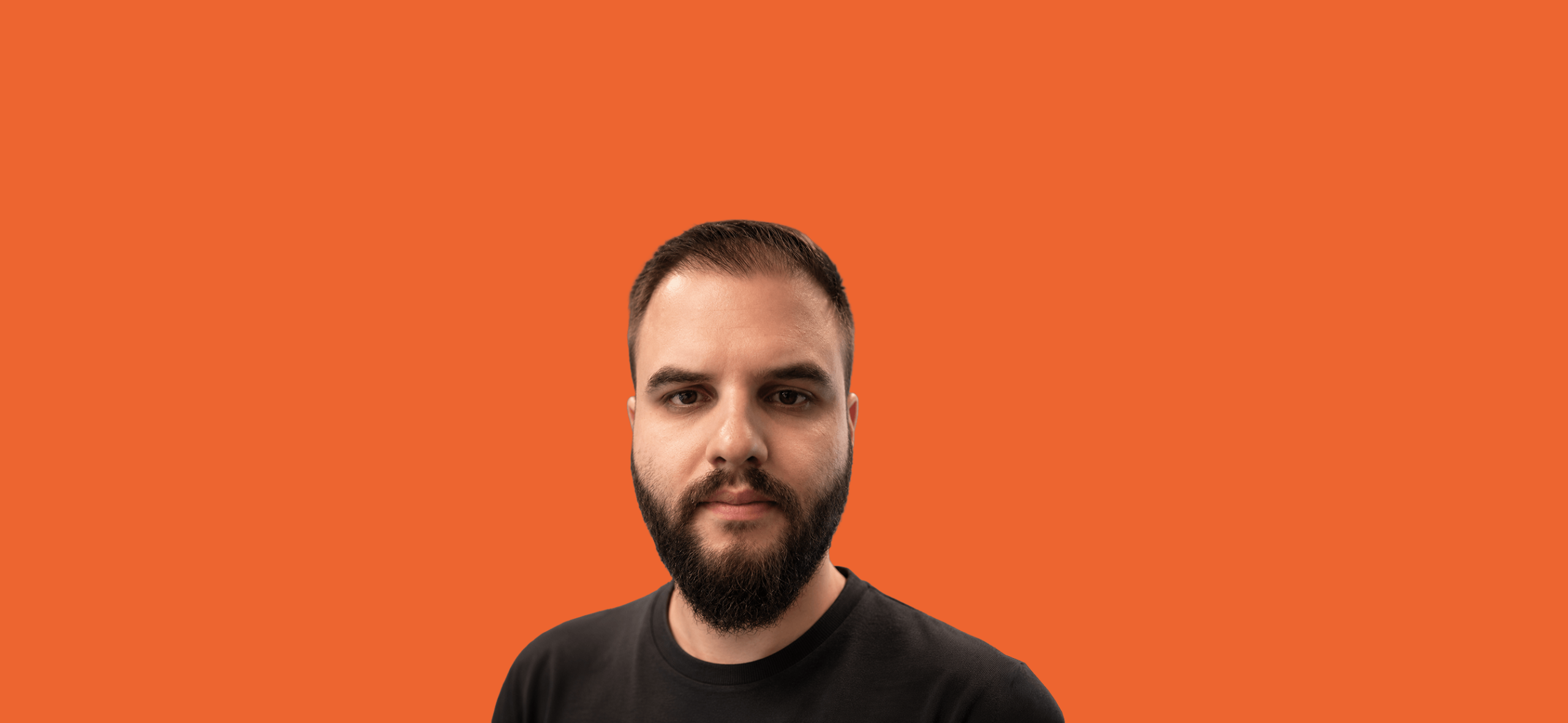
We sat down with Rodolfo Cayuela, Software Engineer at Dev.Pro, to talk about what it takes to grow from a mid-level developer into a senior one. Rodolfo has been with the company for two years and also spends a fair amount of his time on the other side of the table, interviewing candidates himself.
In this conversation, he shares how his interview preparation evolved as he moved up the ladder, the subtle signals he looks for (and watches out for) when hiring, and his honest take on how much weight GitHub profiles really carry once you have solid professional experience behind you.
How long have you been with the company, and what do you like most about it?
I've been with Dev.Pro for about two years. What I like most is that we genuinely feel like part of a team. All the events and initiatives help us connect with our coworkers, rather than making us feel like we're just cogs in a machine.
How did your interview preparation change when you moved from Junior/Mid-level roles to Senior roles?
The biggest difference is that you need to be ready to propose solutions, not just talk about technology and code. When preparing for an interview, I go beyond sharpening my coding skills. I also like using AI to discuss problems and solutions, such as: "How would you add redundancy to an existing system?" or "How would you improve performance in a legacy system while minimizing downtime?"
Those kinds of thought experiments are what separate a mid-level developer from a senior one.
Those kinds of thought experiments are what separate a mid-level developer from a senior one.
When you're the interviewer, what is a "soft" red flag that makes you hesitate, even if the candidate's code is perfect?
A lack of interaction. When solving a problem, a good developer will bounce ideas off the people around them. If a candidate answers questions without asking follow-up questions or discussing alternative approaches, they're probably not a strong team player, and that's a red flag for me.
What are the top three questions you ask a company to determine whether its engineering culture is healthy?
- How common is overtime, and how is it compensated?
- How does the company view pair programming?
- What code quality metrics does the company use?
- How does the company view pair programming?
- What code quality metrics does the company use?
How do you gracefully handle a technical question you don't know the answer to during a high-stakes interview?
Honesty—but always give the interviewer a direction. You can say, "I don't know, but this seems similar to X."
Not knowing something is completely normal. There are countless tech stacks, and you'll never know everything about all of them. What matters is your ability to connect concepts, correlate architectures, and explain how you would approach solving the problem if it came up in a real-world situation.
Not knowing something is completely normal. There are countless tech stacks, and you'll never know everything about all of them. What matters is your ability to connect concepts, correlate architectures, and explain how you would approach solving the problem if it came up in a real-world situation.
At the senior level, how much weight do GitHub profiles or personal projects carry compared to your professional track record?
The more relevant professional experience you have, the less your personal projects tend to matter. That said, approved contributions to large open-source projects still carry real weight and can positively influence how your overall profile is perceived.
What would you suggest to a specialist who wants to move from Intermediate to Senior?
Go the extra mile, and be patient.
The difference between a mid-level developer and a senior developer comes down to responsibility and experience more than raw technical ability. Senior developers are usually the ones taking on the riskier, longer-term tasks, which means you need to be able to handle unexpected challenges, solve problems under uncertainty, and communicate them clearly without causing panic.
There's no shortcut to building those skills, you develop them by living through those experiences, and that takes time.
The difference between a mid-level developer and a senior developer comes down to responsibility and experience more than raw technical ability. Senior developers are usually the ones taking on the riskier, longer-term tasks, which means you need to be able to handle unexpected challenges, solve problems under uncertainty, and communicate them clearly without causing panic.
There's no shortcut to building those skills, you develop them by living through those experiences, and that takes time.
Wrapping Up
If there’s one takeaway from this conversation, it’s that becoming a senior engineer is largely about learning to navigate situations where you don’t have all the answers. Whether it’s admitting a gap in your knowledge during an interview, taking on the riskier task that nobody else wants, or simply asking thoughtful questions about a company’s engineering culture before you join, the common thread is communication and ownership.
As Rodolfo puts it, there’s no shortcut to building those instincts. Just time, patience, and a willingness to go the extra mile.